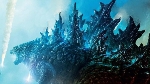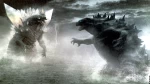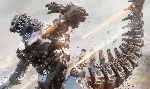

Across the Showa, Heisei, Millennium, and MonsterVerse eras, Ghidorah has appeared in multiple forms, origins, and power levels, ranging from an extraterrestrial destroyer to a genetically engineered weapon and even a manifestation of inter-dimensional energy. Understanding these variations offers a clearer picture of how the character has evolved while maintaining its core identity as a symbol of overwhelming, often cosmic, threat.
Showa Era Ghidorah (1964–1972)
King Ghidorah made his debut in Ghidorah, the Three-Headed Monster (1964), immediately establishing himself as a force beyond anything Earth’s monsters had faced. Unlike Godzilla—who, even in early portrayals, retained some connection to humanity—Ghidorah was introduced as a pure agent of destruction, an alien entity that had already annihilated civilizations on other worlds, including Venus in some interpretations.

This version of Ghidorah is characterized by its relentless aggression and chaotic behavior. With gravity beams emitted from each head, massive wings capable of generating hurricane-force winds, and a regenerative durability that allowed it to withstand coordinated assaults, Showa Ghidorah required an unprecedented alliance between Godzilla, Rodan, and Mothra to be driven off.
Throughout subsequent appearances such as Invasion of Astro-Monster (1965) and Destroy All Monsters (1968), Ghidorah’s role gradually shifted. It became less of an unstoppable cosmic horror and more of a controlled or manipulated weapon, often used by alien races attempting to conquer Earth. This subtle downgrade in threat level reflected the increasingly action-oriented and sometimes lighter tone of the later Showa films, but Ghidorah remained a benchmark of power within the kaiju hierarchy.
Heisei Era Ghidorah (1991)
The Heisei era re-imagined Ghidorah in Godzilla vs. King Ghidorah (1991), offering one of the franchise’s most complex and controversial origin stories. Rather than arriving as a fully formed space monster, this Ghidorah began as a small, genetically engineered creature known as a Dorat, created by time travellers from the future.

Through exposure to nuclear radiation in the past, the Dorats merged and mutated into King Ghidorah, re-framing the creature as a product of human interference and temporal manipulation rather than purely alien origin. This version is notably more grounded in pseudo-scientific explanation, aligning with the Heisei era’s emphasis on continuity and realism.
Heisei Ghidorah is portrayed as more powerful and strategic than its Showa counterpart. Its gravity beams are more precise and destructive, and its presence is tied directly to global catastrophe. However, this incarnation is ultimately defeated and later rebuilt as Mecha-King Ghidorah, a cybernetic reconstruction used by future humans in an attempt to control history.
Mecha-King Ghidorah
Following its defeat, Ghidorah’s remains are salvaged and technologically enhanced, giving rise to Mecha-King Ghidorah—a hybrid of organic kaiju and advanced machinery. This form replaces one of Ghidorah’s heads with a mechanical counterpart and introduces energy restraints and control systems designed to weaponize the creature.

Mecha-King Ghidorah represents a recurring theme in Godzilla lore: humanity’s attempt to control forces far beyond its understanding. While more structurally stable and weaponized than its original form, it ultimately fails to surpass Godzilla, reinforcing the franchise’s long-standing cautionary stance on technological overreach.
Millennium Era Variants (2001)
In Godzilla, Mothra and King Ghidorah: Giant Monsters All-Out Attack (2001), Ghidorah undergoes one of its most radical reinterpretations. Here, it is no longer an alien invader but a mystical guardian creature, tied to Earth’s spiritual balance alongside Mothra and Baragon.

This version begins as a smaller, less imposing creature and gradually evolves into its full three-headed form during the film. Unlike previous incarnations, Guardian Ghidorah is positioned as a protector rather than a destroyer, standing in opposition to a far more malevolent Godzilla—himself re-imagined as a vengeful embodiment of wartime souls.
Despite its noble role, this Ghidorah is notably weaker than other versions, relying more on its symbolic importance than raw dominance. Its inclusion highlights the flexibility of the character, demonstrating that Ghidorah can serve narrative roles beyond that of a simple antagonist.
Anime Trilogy Ghidorah (2018)
In Godzilla: The Planet Eater (2018), Ghidorah is re-imagined as a higher-dimensional entity, far removed from its traditional physical form. Summoned through advanced alien rituals, this Ghidorah manifests as a series of golden, serpentine heads that phase in and out of reality.

Unlike previous incarnations, this version exists partially outside the laws of physics, rendering it nearly untouchable. It does not rely on brute force alone but instead embodies a form of cosmic inevitability, feeding on entire planets while remaining immune to conventional attacks.
This interpretation leans heavily into abstract science fiction and philosophical themes, portraying Ghidorah less as a creature and more as a conceptual force of destruction. Its defeat hinges not on physical strength, but on disrupting the metaphysical conditions that allow it to exist within the universe.
MonsterVerse Ghidorah (2019)
Legendary Pictures’ Godzilla: King of the Monsters (2019) presents perhaps the most visually and conceptually refined version of the creature: Monster Zero, also known as King Ghidorah. This incarnation returns to the character’s extraterrestrial roots but amplifies them with modern visual effects and a deeper ecological context.

MonsterVerse Ghidorah is portrayed as an invasive alpha predator, an alien lifeform that disrupts Earth’s natural order. Unlike Godzilla, who is framed as a balancing force within the planet’s ecosystem, Ghidorah is explicitly unnatural—capable of terraforming the environment through massive storm systems generated by its own bio-electrical energy.
Each of Ghidorah’s three heads exhibits distinct personalities, adding a layer of behavioural complexity not seen in earlier versions. Its regenerative abilities are pushed to new extremes, allowing it to regrow severed heads, while its gravity beams and wing-generated storms operate on a global scale.
This version firmly re-establishes Ghidorah as a planetary-level threat, requiring not just Godzilla, but human intervention and sacrifice to ultimately defeat.
Singular Point Ghidorah (2021)
In Godzilla Singular Point, Ghidorah appears as an archetype-level entity, connected to the fabric of reality itself. Rather than a traditional kaiju, it represents a distortion in spacetime, capable of altering causality and existing across multiple dimensions simultaneously.
This version continues the trend established by the anime trilogy, pushing Ghidorah further into the realm of theoretical physics and abstract existence. It reinforces the idea that Ghidorah is not merely a recurring monster, but a recurring phenomenon, capable of manifesting in different forms depending on the conditions of the universe.
Across its many incarnations, King Ghidorah has remained one of the most adaptable and enduring figures in the Godzilla franchise. Whether portrayed as an alien conqueror, a human-made abomination, a mystical guardian, or an inter-dimensional force, each version reflects the storytelling priorities of its era.
Published Mar 19, 2026 • Last Updated: Mar 19, 2026